Beyond the Headlines: What's Really Happening in Dubai Real Estate
Dubai Under Pressure: What the Conflict Means for Property — and Why Marbella Is on the Radar There is a considerable gap between the international headlines about Dubai and the reality experienced…
Områden
Dubai Under Pressure: What the Conflict Means for Property — and Why Marbella Is on the Radar
There is a considerable gap between the international headlines about Dubai and the reality experienced on the ground. In this analysis, we cut through the noise to examine what is genuinely happening in the emirate's property market, where the real opportunities now lie, and what these developments mean for buyers and owners with an interest in the Costa del Sol. Our aim is to offer a measured, evidence based perspective rather than the alarmism that has dominated much of the recent commentary.
Life in Dubai right now
Since early 2026, the UAE has faced a sustained wave of drone and missile activity. The country's air defence systems have intercepted the overwhelming majority of incoming threats, though not without exception there have been casualties and some damage to buildings. Even so, the picture on the ground is considerably calmer than the coverage would suggest. Restaurants, malls and clubs have largely remained open, flights have continued with only periodic diversions and precautionary suspensions, and the reduction in everyday activity has thinned traffic so dramatically that residents joke Dubai has briefly become a "15 minute city," where one can travel almost anywhere within a quarter of an hour.
Equally telling is the visible presence of the UAE's leadership throughout the crisis. Senior figures have continued to appear in public at shopping centres and at major events such as the Dubai World Cup a deliberate and effective signal of confidence in the country's defences and institutions. When a head of state moves through the same spaces as ordinary residents, the message is unambiguous: the situation, while serious, is firmly under control. It would nonetheless be wrong to characterise this as a closed chapter. It remains a live and evolving situation, with periods of renewed tension, and any decision should be weighed accordingly.
A market that paused - But did not crack
Dubai's property market entered this period on the back of four consecutive years of exceptional performance, with double digit annual price growth across many areas and gains exceeding 20% in some segments. This expansion was underpinned by a population growing by several hundred thousand people each year, with demand consistently outpacing the available supply.
Then, in March 2026, activity slowed to a near standstill. The combination of the conflict, the shorter working hours of Ramadan and the subsequent Eid break effectively froze decision making across the market. The critical observation, however, is that the market has not collapsed. There has been no wave of distressed sales. Because so much equity has accumulated in recent years, the overwhelming majority of owners purchased well below current values and feel no financial pressure to sell at a discount.
A single transaction illustrates the prevailing mood. A high quality villa on Pearl Jumeira, listed in excess of 15 million dirhams, remained at its full public asking price while the owner was privately prepared to accept a reduction of 10–15%. This captures the secondary market precisely: no desperation, but a quiet willingness to be flexible once negotiations begin in earnest.
Where the real value lies
For several years, developers held a commanding position, dictating terms to a queue of eager buyers. Discounts were rare and payment plans were non negotiable. That dynamic has now shifted meaningfully, and this is where the genuine opportunity sits:
Government and large scale developers: previously inflexible, now offering discounts in the region of 3–4% and showing a clear willingness to negotiate.
Private developers: offering reductions of approximately 10–15% on new projects, frequently accompanied by fee waivers and other incentives.
Prime secondary market: listing prices are being held publicly, but discounts of 10–15% are commonly available through private negotiation.
In effect, developers are now prepared to negotiate in a manner not seen since the COVID period, a remarkable reversal in a matter of months. Additional selling pressure is expected to emerge from three interconnected sectors whose proprietors typically hold substantial property portfolios: tourism and hospitality, which has been most severely affected; the broader real estate services ecosystem; and shipping and logistics, predictably strained by disruption around the Strait of Hormuz. As these businesses come under pressure, a greater volume of property is likely to reach the market over the coming months.
How off plan protection works
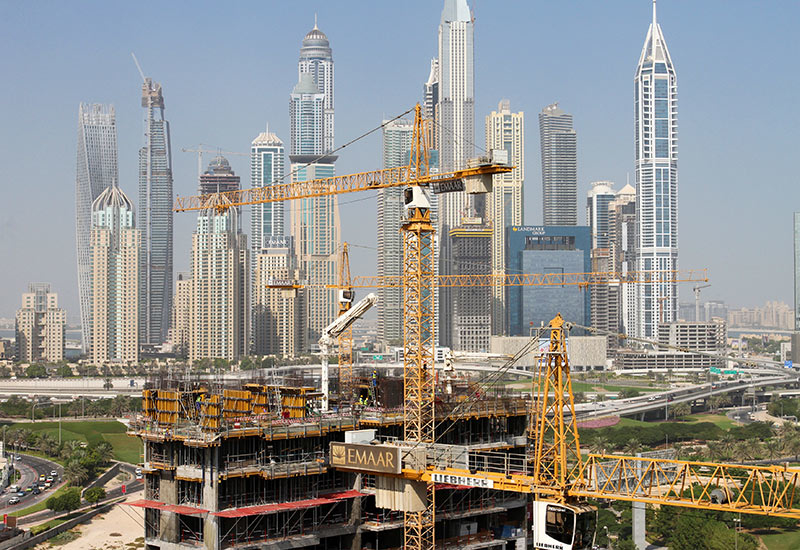
For those considering a development that has yet to be built, the protections in Dubai are genuinely robust. Every payment made by an off plan buyer is deposited into a project specific escrow account overseen by the Dubai Land Department, rather than the developer's general corporate account. These funds may only be applied to that particular development and are released to the developer in stages, as predefined construction milestones are reached.
The trade off is straightforward but important. Government backed developers such as Emaar, Meraas and Nakheel offer more modest discounts but carry sovereign grade security and minimal execution risk. Private developers, by contrast, offer the steepest discounts but require a greater tolerance for delivery risk. The appropriate choice depends entirely on the individual buyer's risk profile and objectives.
What buyers and sellers should do
The optimal strategy depends on which side of the transaction you occupy. For buyers, the current environment represents a rare and genuine window. Cash buyers in particular hold leverage they simply did not possess a few months ago the ability to negotiate not only on price but on terms. Those who commit during this period are well positioned to be the medium term beneficiaries as the market recovers. The principal caveat is risk appetite; not every buyer is comfortable transacting amid uncertainty, even with the prospect of a favourable outcome.
For sellers, the guidance is more conservative: if you are able to wait, do so. With substantial equity in the market and no broad based pressure to discount, there is little justification for selling below value without a compelling reason. Those who must sell are best advised to maintain their listing price publicly while accepting that a private discount of 10–15% will likely be necessary. Less distinctive properties may need to concede somewhat more.
When will the market recover?
A degree of honesty is warranted here. Even were the conflict to end immediately, a realistic estimate is six to nine months for buyer confidence particularly among the overseas buyers on whom Dubai relies to return in full. Population growth, the principal driver of recent price appreciation, is expected to slow considerably, and certain areas may experience modest negative growth over the year.
Set against these headwinds, however, are formidable structural strengths: one of the world's largest sovereign wealth funds, with effectively unlimited capacity to reinvest; an internationally proven marketing apparatus; defence systems that have demonstrated their effectiveness under sustained pressure; two to three decades of city building that cannot be replicated quickly; and a continuity of policy direction unencumbered by short electoral cycles. The most probable outcome is a measured softening rather than a correction, with prime, scarcity driven assets and areas of strong rental demand proving the most resilient. Newer developments in less established locations are likely to feel the slowdown most acutely.
The Marbella connection
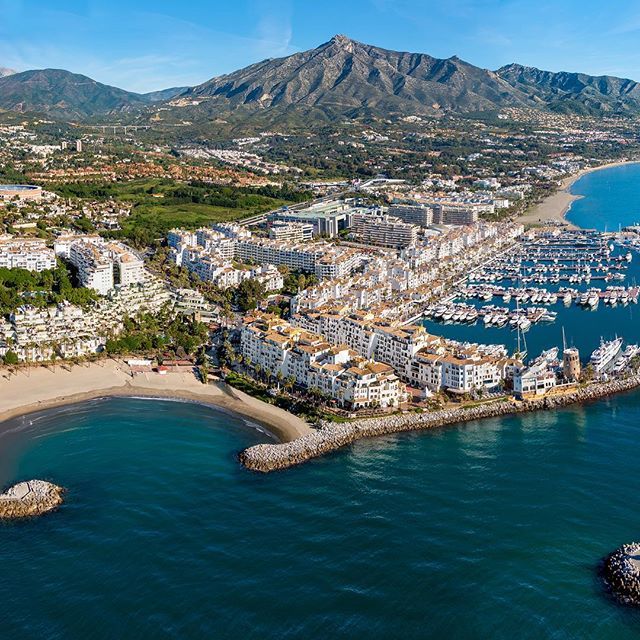
This is where the situation becomes directly relevant to our own market. A significant proportion of our clients already maintain a multi property lifestyle typically a residence in Dubai for part of the year, a home in Marbella, and perhaps a third base elsewhere in Europe. Their conduct throughout this period has been instructive: none are disposing of their Dubai assets at distressed prices. They have simply relocated their time to Europe and adopted a considered wait and see approach.
We are also observing early signs of fresh demand from the Middle East, with high net worth individuals exploring diversification into Marbella at a level some had not previously contemplated. It is a natural fit, and one we have responded to by strengthening our capacity to serve this emerging segment. The underlying principle is one that sophisticated investors understand well: holding property across multiple geographies with differing risk profiles is not merely a matter of lifestyle, but a deliberate strategy for protecting wealth.
For Middle Eastern families considering Marbella for the first time, the Costa del Sol offers a particularly compelling proposition: a Mediterranean climate, a transparent legal framework underpinned by Spanish and EU law, world class international schooling, and a mature, liquid luxury property market with a long established track record.